









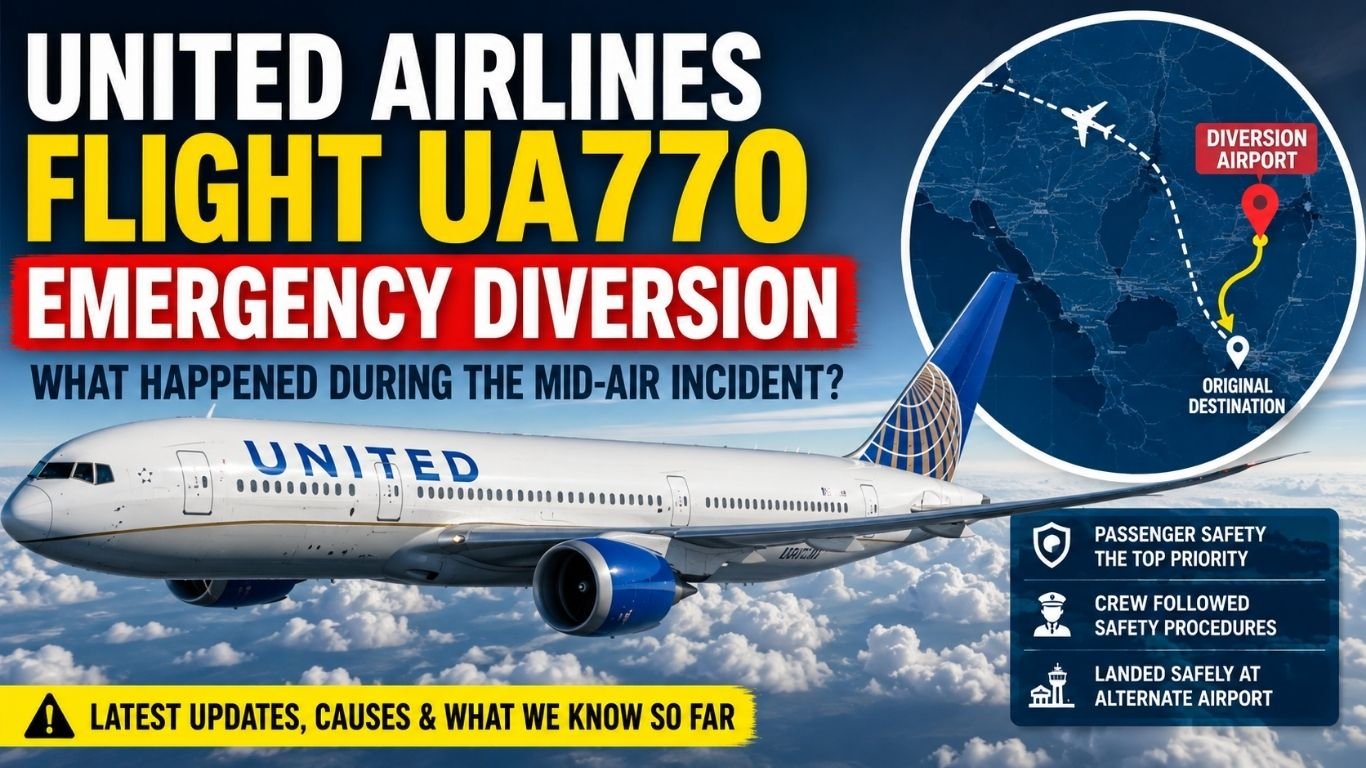
Air travel remains one of the safest forms of transportation in the world, but unexpected situations can still arise during a flight. Recently, the topic of United Airlines Flight UA770 emergency diversion has attracted significant attention from travelers, aviation enthusiasts, and news readers alike. Whenever an aircraft is forced to change its route and land at an alternate airport, questions naturally follow regarding passenger safety, the cause of the diversion, and the airline’s response.
In this article, we take a closer look at the United Airlines Flight UA770 emergency diversion, exploring what an emergency diversion means, the possible reasons behind such decisions, how airlines handle these situations, and what passengers can expect when an unexpected event occurs mid-flight.
Understanding an Emergency Diversion
An emergency diversion occurs when an aircraft is required to land at an airport different from its originally planned destination. Contrary to what many people assume, an emergency diversion does not always indicate a catastrophic situation. In many cases, pilots choose to divert flights as a precautionary measure to ensure the safety of everyone on board.
The aviation industry operates under strict safety standards. Pilots are trained to respond quickly to any unusual situation, whether it involves technical concerns, medical emergencies, weather conditions, or operational issues. The decision to divert a flight is always made with passenger and crew safety as the highest priority.
The United Airlines Flight UA770 emergency diversion highlights how modern aviation systems are designed to handle unexpected circumstances efficiently and professionally.
What Happened on United Airlines Flight UA770?
Reports surrounding the United Airlines Flight UA770 emergency diversion indicate that the flight altered its planned route and proceeded to an alternate airport after an issue was identified during the journey. While airlines often conduct thorough investigations before releasing detailed statements, the diversion itself demonstrates that the flight crew followed established safety procedures.
When pilots receive information suggesting a potential concern, they work closely with air traffic control, airline operations teams, and onboard crew members to assess the situation. If continuing to the original destination is deemed less safe than landing elsewhere, an immediate diversion may be initiated.
Passengers on board are typically informed about the situation through announcements from the flight crew. The primary objective is to keep everyone calm while ensuring that the aircraft reaches a suitable airport as safely as possible.
Common Reasons for Emergency Diversions
Although specific details regarding the United Airlines Flight UA770 emergency diversion may vary, emergency diversions generally occur for several common reasons:
1. Medical Emergencies
One of the most frequent causes of flight diversions is a passenger or crew medical emergency. If someone requires urgent medical attention, pilots may choose to land at the nearest appropriate airport where medical personnel can assist immediately.
2. Mechanical Precautions
Aircraft systems continuously monitor thousands of components during flight. Sometimes a warning indicator or system alert may prompt pilots to divert as a precaution, even when the aircraft remains fully controllable.
3. Weather Conditions
Severe storms, turbulence, heavy winds, or reduced visibility can create unsafe conditions along a planned route. Diversions help avoid hazardous weather and protect passengers.
4. Security Concerns
In rare situations, security-related issues may require a flight to divert. Airlines and aviation authorities take any potential threat seriously and act accordingly.
5. Operational Factors
Unexpected airport closures, runway issues, or air traffic restrictions can also result in a flight being redirected to another airport.
How Airlines Respond During an Emergency Diversion
The response process during an emergency diversion is highly organized. When an incident occurs, multiple teams become involved simultaneously.
Pilots maintain communication with air traffic controllers while monitoring the aircraft’s systems. Flight attendants ensure passenger safety and provide updates whenever possible. Airline operations centers coordinate ground support at the diversion airport.
In the case of the United Airlines Flight UA770 emergency diversion, standard aviation procedures would have been followed to ensure a safe landing and smooth handling of passengers after arrival.
Emergency services are often placed on standby as a precaution whenever an aircraft declares an emergency or requests priority handling. This does not necessarily mean the situation is critical; it is simply part of aviation safety protocols.
Passenger Experience During a Diversion
For passengers, an emergency diversion can be an unexpected and stressful experience. However, understanding the process can help reduce anxiety.
Most travelers first learn about the diversion through a cabin announcement. Depending on the circumstances, the crew may provide updates regarding the reason for the diversion and estimated arrival time at the alternate airport.
After landing, passengers may experience delays while airline representatives arrange transportation, replacement aircraft, maintenance inspections, or rebooking services.
Despite the inconvenience, diversions are ultimately a sign that safety procedures are working as intended. Airlines prefer to act cautiously rather than risk continuing a flight under uncertain conditions.
Aviation Safety Standards and Emergency Procedures
The United Airlines Flight UA770 emergency diversion serves as a reminder of the extensive safety framework that governs modern aviation.
Commercial airline pilots undergo rigorous training that includes emergency simulations, decision-making exercises, and regular evaluations. Aircraft are inspected continuously and maintained according to strict regulatory requirements.
In addition, air traffic controllers, maintenance engineers, and airline operations personnel work together to ensure that any issue is addressed promptly.
Every diversion is carefully documented and reviewed. If maintenance concerns are involved, aircraft inspections are conducted before the plane returns to service.
This multilayered approach helps maintain the exceptionally high safety standards associated with commercial air travel.
Why Diversions Are Often a Positive Safety Decision
Many travelers hear the term “emergency diversion” and immediately assume a dangerous situation occurred. In reality, diversions often demonstrate that safety systems are functioning exactly as designed.
Pilots are encouraged to make conservative decisions when uncertainty exists. Rather than taking unnecessary risks, they choose the safest available option.
The United Airlines Flight UA770 emergency diversion reflects the aviation industry’s commitment to prioritizing passenger welfare above operational convenience. While diversions may cause delays and disruptions, they help prevent potential problems from escalating.
Lessons for Travelers
Incidents like the United Airlines Flight UA770 emergency diversion offer several important lessons for travelers:
- Always pay attention to crew announcements.
- Follow safety instructions during all phases of flight.
- Remain calm during unexpected situations.
- Understand that diversions are precautionary measures designed to protect passengers.
- Allow flexibility in travel plans when disruptions occur.
By staying informed and cooperative, passengers can contribute to a smoother experience during unexpected events.
Conclusion
The United Airlines Flight UA770 emergency diversion has generated considerable interest because emergency diversions naturally attract public attention. While specific circumstances may vary, the event underscores the effectiveness of modern aviation safety procedures and the professionalism of airline crews.
Emergency diversions are not signs of failure; rather, they are examples of safety-first decision-making in action. Whether caused by a medical issue, weather concern, technical precaution, or operational factor, the ultimate goal remains the same: ensuring the safe arrival of every passenger and crew member.
As the aviation industry continues to prioritize safety above all else, incidents such as the United Airlines Flight UA770 emergency diversion demonstrate why commercial air travel remains one of the safest and most reliable methods of transportation worldwide.