






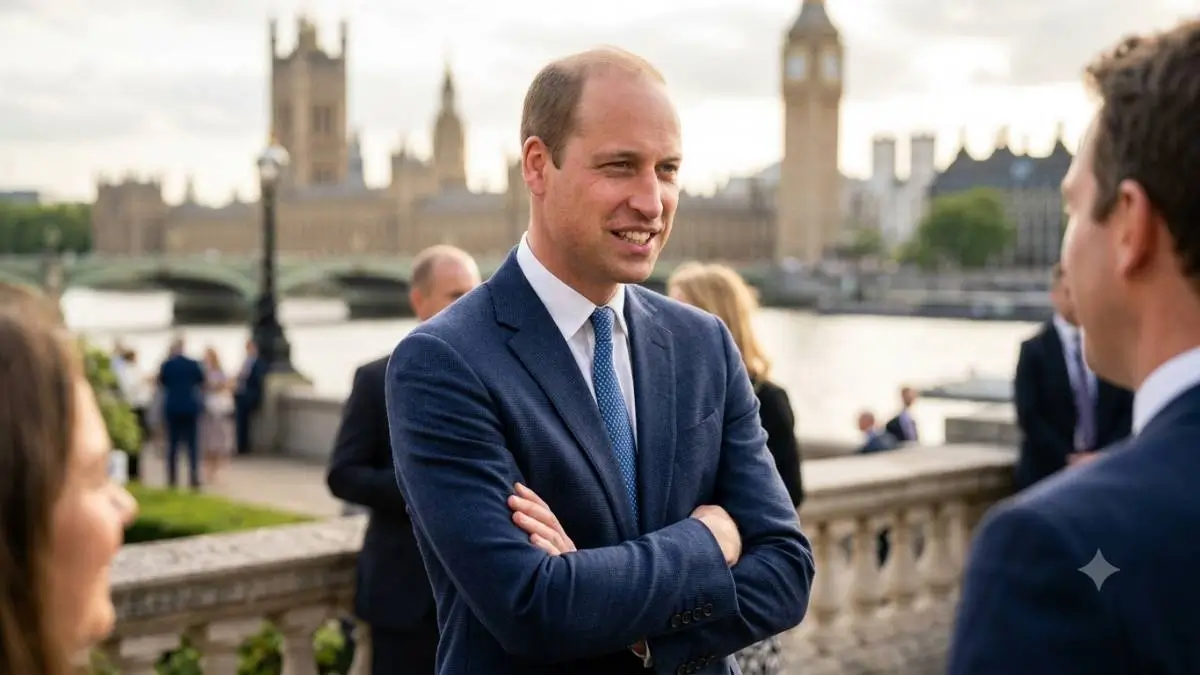
As the British monarchy navigates the complexities of the modern era, one figure stands at the center of its future: Prince William. Born into an era of intense media scrutiny and deep-seated royal tradition, the Prince of Wales has spent his life preparing for an inevitable destiny.
Today, Prince William represents a bridge between a thousand-year-old institution and a rapidly evolving modern society. Therefore, this comprehensive biography explores the life, evolving legacy, and steady path to the throne of the man who will one day be King William V.
Quick Facts: The Prince of Wales
| Attribute | Details |
| Full Name | William Arthur Philip Louis |
| Title | His Royal Highness The Prince of Wales (previously Duke of Cambridge) |
| Date of Birth | June 21, 1982 |
| Parents | King Charles III and Diana, Princess of Wales |
| Education | University of St Andrews (MA in Geography); Royal Military Academy Sandhurst |
| Military Service | Royal Air Force (Search and Rescue), Blues and Royals |
| Key Initiatives | The Earthshot Prize, United for Wildlife, Homewards |
Early Life: The Boy Born to Be King
Prince William was born at St Mary’s Hospital in London on June 21, 1982. From the moment of his birth, his life was mapped out by the strict laws of royal succession. Because he was the firstborn son of Charles, then Prince of Wales, and Diana, Princess of Wales, he became second in line to the British throne.
Breaking the Royal Educational Mold
Unlike previous generations of royal heirs who studied with private tutors behind palace walls, Prince William’s upbringing broke new ground. Guided heavily by Princess Diana’s desire to give her sons a sense of normalcy, William attended ordinary nursery and primary schools.
He eventually attended Eton College, which is one of the UK’s most prestigious independent boarding schools. At Eton, he studied geography, biology, and art history. Furthermore, he showed a distinct fondness for sports, particularly water polo and football.
The Loss of Princess Diana
The defining tragedy of Prince William’s youth occurred on August 31, 1997. His mother, Princess Diana, died in a high-speed car crash in Paris. William was just 15 years old at the time. He and his younger brother, Prince Harry, captured the world’s heartbreak as they walked behind their mother’s coffin during the funeral procession through London. Consequently, this profound loss deeply shaped William’s emotional maturity. It also instilled in him a lifelong commitment to mental health advocacy and humanitarian causes.
Coming of Age: St Andrews, Military, and Public Service
Following a gap year spent doing volunteer work in Chile, Prince William enrolled at the University of St Andrews in Scotland in 2001.
Meeting Catherine Middleton
It was at St Andrews that William’s personal life changed forever. Initially studying art history before switching his major to geography, he met a fellow student named Catherine “Kate” Middleton. What began as a close friendship soon blossomed into a high-profile romance. Fortunately, their time in the quiet Scottish coastal town allowed them to build a strong foundation away from the constant lens of the paparazzi.
William graduated with a Master of Arts degree in 2005. As a result, he achieved the highest academic qualification of any heir to the British throne.
A Career of Duty in Uniform
Rather than moving directly into full-time royal duties, Prince William chose to serve his country in uniform. He entered the Royal Military Academy Sandhurst in 2006. Soon after, he was commissioned as an officer in the Blues and Royals regiment of the Household Cavalry.
[Sandhurst Academy] ➔ [Blues & Royals Officer] ➔ [RAF Search & Rescue Pilot] ➔ [East Anglian Air Ambulance]
Driven by a desire to perform active operational roles, he transferred to the Royal Air Force (RAF) to train as a helicopter pilot. By 2010, he had joined the RAF Search and Rescue Force, stationed at RAF Valley in Anglesey, Wales. Operating under the name “Flight Lieutenant Wales,” William flew over 150 search-and-rescue operations. He saved lives in treacherous North Sea conditions.
He later transitioned into civilian life as a pilot for the East Anglian Air Ambulance from 2015 to 2017. He donated his entire salary to charity. Thus, this period of his life solidified his reputation as a hands-on, practical prince.
The Modern Royal Family: Marriage and Fatherhood
On April 29, 2011, billions of viewers around the world tuned in to watch Prince William marry Catherine Middleton at Westminster Abbey. On his wedding day, Queen Elizabeth II bestowed upon him the title of Duke of Cambridge.
Prince William ─── married (2011) ─── Catherine Middleton
│
┌──────────────────────────┼──────────────────────────┐
▼ ▼ ▼
Prince George Princess Charlotte Prince Louis
(Born: 2013) (Born: 2015) (Born: 2018)
The marriage marked a significant shift toward a more relatable, modern image for the royal family. Together, the Prince and Princess of Wales have three children:
- Prince George of Wales (born July 22, 2013) – The next heir apparent.
- Princess Charlotte of Wales (born May 2, 2015)
- Prince Louis of Wales (born April 23, 2018)
William’s approach to parenting mirrors his own mother’s philosophy. He and Catherine are deeply involved in their children’s daily routines. Therefore, they carefully balance formal royal representation with a protected, private family life outside London.
Defining a Legacy: Core Philanthropies and Modern Impact
As Prince William stepped away from his military career to become a full-time working royal, he began building a distinct, forward-facing philanthropic portfolio. Instead of spreading his efforts thinly across hundreds of organizations, William has focused on driving tangible change in a few key areas.
1. Environmental Activism and The Earthshot Prize
Undoubtedly, the crown jewel of Prince William’s modern legacy is The Earthshot Prize, which he launched through The Royal Foundation in 2020. Inspired by President John F. Kennedy’s “Moonshot” program, Earthshot is an ambitious global environmental award. It is designed to incentivize innovative solutions to the planet’s greatest environmental challenges.
The prize awards five £1 million grants every year across ten years, focusing on:
- Protecting and restoring nature
- Cleaning our air
- Reviving our oceans
- Building a waste-free world
- Fixing our climate
2. Combating Illegal Wildlife Crime
Through his United for Wildlife initiative, Prince William has successfully united global transportation companies, financial institutions, and tech giants. This coalition works diligently to disrupt the supply chains of illegal wildlife trafficking. He has leveraged corporate accountability to treat environmental crime not just as a conservation issue, but as a severe global black-market problem.
3. De-Stigmatizing Mental Health
Alongside Princess Catherine and Prince Harry, William launched the Heads Together campaign in 2016. The initiative was instrumental in changing the conversation around mental health in the United Kingdom. William has focused specifically on the psychological well-being of emergency first responders, veterans, and young men. He shared his own struggles with grief following his mother’s death to break historical taboos.
4. Eradicating Homelessness
In a direct nod to Princess Diana’s legacy, William launched Homewards in June 2023. The five-year program aims to demonstrate that homelessness can be rare, brief, and unrepeated. It achieves this by creating localized, sustainable housing models across six flagship locations in the UK.
Path to the Throne: Preparing for the Crown
The passing of Queen Elizabeth II in September 2022 marked a profound transition. As King Charles III ascended the throne, William instantly became the heir apparent. He took on the historic title of Prince of Wales, alongside inheriting the vast Duchy of Cornwall estate.
The New Duchy Strategy: As the Duke of Cornwall, Prince William has instituted a fresh era of transparency and social responsibility. He rolled out an aggressive multi-million dollar investment plan. This plan focuses on building thousands of eco-friendly, affordable housing units on Duchy land and restoring ancient English landscapes, directly tackling the regional housing crisis.
A Slimmed-Down Monarchy
In his current role, Prince William is executing a vision of a “slimmed-down” monarchy. He recognizes that public support requires fiscal responsibility and societal value. Consequently, he focuses on high-impact public appearances, intentional diplomatic tours, and global advocacy over empty pageantry.
His working relationship with King Charles III remains unified. He acts as the King’s chief representative on international missions and anchors the stability of the crown through personal and public transitions alike.
Conclusion: The Era of King William V Ahead
Prince William’s path to the throne is defined by a lifelong preparation. He balances the heavy weight of centuries-old tradition with the demands of a changing world. He has successfully transitioned from a grieving teenager under the lens of a relentless media circus to a dedicated military pilot, an active father, and a visionary global leader.
When the time comes for him to ascend the throne as King, William will bring with him an institutional framework rebuilt for the modern age. This framework will focus on climate progress, mental health transparency, and a deep connection to the communities he is destined to govern.
To watch the Prince of Wales in action during his formal duties, you can check out this coverage of Prince William and Princess Catherine at Royal Ascot, which highlights the blend of traditional pageantry and modern diplomatic representation that characterizes their current roles.