






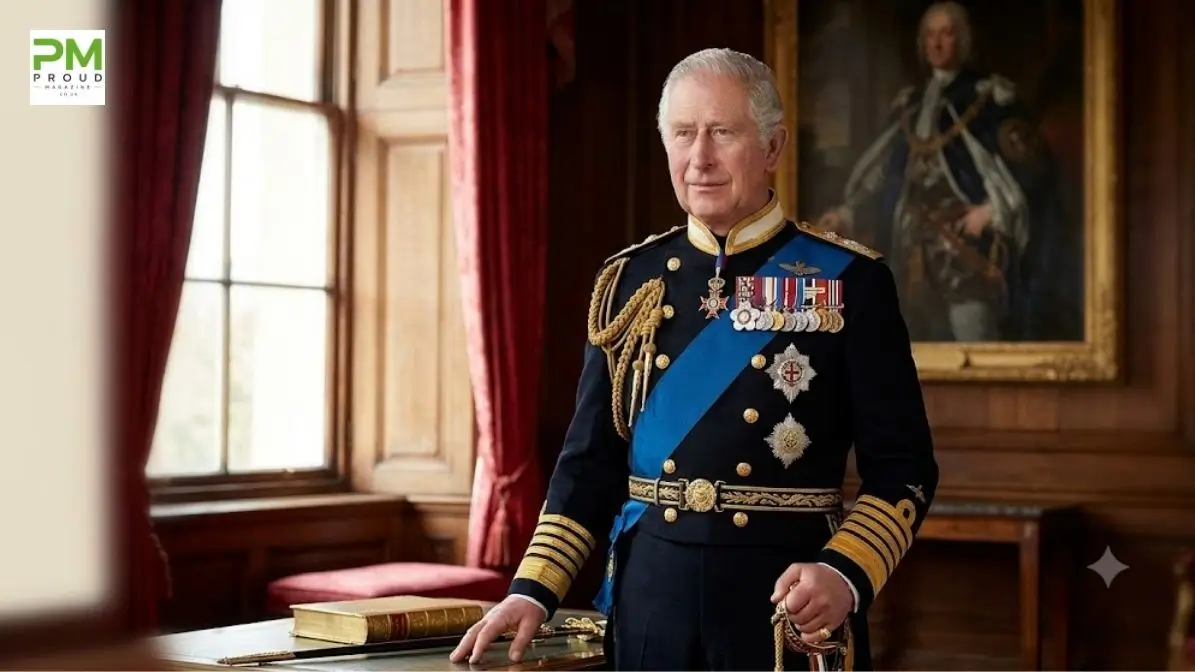
The British monarchy is navigating one of its most transformative chapters in modern history. At the center of this evolution is King Charles III, a sovereign who spent more than seven decades preparing for the throne and is now actively redefining what a 21st-century constitutional monarch looks like.
From unprecedented decisions regarding royal real estate to historic breakthroughs in financial transparency, the House of Windsor is shifting its narrative. This comprehensive profile explores the vital pillars of the King’s modern reign: his current age and historic milestone as the oldest ascending monarch, the fascinating economics behind his multi-million-dollar net worth, and the most critical updates impacting the royal family today.
1. How Old Is King Charles III? A Historic Timeline
Born at Buckingham Palace on November 14, 1948, King Charles III is 77 years old.
His age is not just a personal data point; it is a historically significant marker for the British state. Having spent 70 years as the heir apparent, Charles was the longest-serving Prince of Wales in history. When he ascended the throne on September 8, 2022, following the passing of his mother, Queen Elizabeth II, he became the oldest person ever to assume the British throne at the age of 73.
The timeline of his path to the crown highlights how his entire life has been a bridge between traditional eras and the challenges of the modern world.
A Royal Birth
November 14, 1948
Born to Princess Elizabeth and Prince Philip, Duke of Edinburgh, at Buckingham Palace during the reign of his grandfather, King George VI.
Becoming Heir Apparent
February 6, 1952
At just three years old, Charles becomes the direct heir apparent to the British throne upon the sudden death of King George VI and the accession of his mother as Queen Elizabeth II.
Investiture as Prince of Wales
July 1, 1969
Following years of study, including learning Welsh at Aberystwyth University, Charles is officially invested as the Prince of Wales by the Queen at Caernarfon Castle.
Accession to the Throne
September 8, 2022
Following the historic 70-year reign of Queen Elizabeth II, Charles immediately succeeds his mother, making history as the oldest person to ever become the British monarch.
The Coronation
May 6, 2023
King Charles III is formally crowned alongside Queen Camilla at Westminster Abbey in a ceremony designed to reflect a modern, multi-faith United Kingdom.
Despite his late-in-life accession, the King has maintained a rigorous schedule, even making global history by becoming only the second British monarch ever to address a joint session of the United States Congress.
2. King Charles III’s Net Worth: Breaking Down the Royal Wealth
When analyzing the wealth of the British monarch, it is essential to distinguish between personal private fortunes and assets held in trust for the nation. King Charles III’s personal net worth is estimated at $800 million.
This figure makes him significantly wealthier than his late mother, Queen Elizabeth II, whose private net worth was estimated closer to $500 million. The growth of this wealth is largely attributed to Charles’s highly lucrative, decades-long stewardship of the Duchy of Cornwall when he was Prince of Wales, which he expanded into a massive commercial real estate and sustainability portfolio before passing it down to Prince William.
To understand exactly where the King’s money comes from, his financial layout must be broken down into three distinct areas:
┌────────────────────────────────────────┐
│ Total Financial Portfolio │
└───────────────────┬────────────────────┘
│
┌────────────────────────────┼────────────────────────────┐
▼ ▼ ▼
┌──────────────────┐ ┌──────────────────┐ ┌──────────────────┐
│ Sovereign Grant │ │Duchy of Lancaster│ │ Private Assets │
│ State-Funded │ │ Private Estate │ │Personal Property │
│ $165M (2025-26) │ │ $33M Annual Cash │ │ Sandringham/etc. │
└──────────────────┘ └──────────────────┘ └──────────────────┘
The Sovereign Grant (The Public Funding)
The Sovereign Grant is the official government funding used to pay for the King’s official duties, royal travel, staff payroll, and the upkeep of working palaces. For the 2025–2026 fiscal year, the Sovereign Grant sits at £132.1 million ($179.6 million).
This money is not a direct handout from taxpayers. Instead, it represents a fixed percentage—recently set at 12%—of the net profits generated by the Crown Estate. The Crown Estate is a massive portfolio of lands, commercial property, and offshore wind farms worth over $20 billion. However, neither the King nor the royal family owns the Crown Estate; its profits are paid directly to the UK Treasury, which then distributes the Sovereign Grant back to the monarchy.
The Duchy of Lancaster (The Private Engine)
For his personal income, the King relies heavily on the Duchy of Lancaster. Ring-fenced from the state by King Henry IV back in 1399, this historic real estate portfolio spans roughly 45,000 acres across England and Wales and is valued at over $911 million.
The Duchy functions as a private trust that passes automatically from monarch to monarch. It generates roughly $30 million to $35 million in pure annual profit, which the King uses to fund his personal expenses, support members of the extended royal family, and advance his philanthropic ventures.
Private Holdings and Assets
Beyond these grand estates, King Charles III personally owns historic country homes like Balmoral Castle in Scotland and the Sandringham Estate in England, both inherited directly from his mother. He also owns elite private collections of art, rare jewelry, stamps, and world-class racehorses, which collectively push his personal net worth to the $800 million mark.
3. Historic Financial Transparency: The King’s Tax Disclosure
In a major move toward modernizing the Crown, King Charles III has officially broken centuries of traditional secrecy by becoming the first British monarch to voluntarily publish a fully detailed breakdown of his personal income and tax expenditures.
| Financial Indicator | Amount (USD equivalent) | Type of Fund / Allocation |
| Personal Net Worth | $800 Million | Total estimated private fortune and inherited assets |
| Sovereign Grant (2025-2026) | $179.6 Million | Public funds for state duties and palace maintenance |
| Annual Duchy Income | $33 Million | Private cash flow generated from the Duchy of Lancaster |
| Annual Personal Tax Paid | $17 Million (£12.9 Million) | Voluntary income and capital gains tax paid to HMRC |
This transparent disclosure shows that the King paid $17 million (£12.9 million) in voluntary taxes for the recent fiscal year. By putting his personal tax documents on the public record, King Charles is actively addressing long-standing criticisms regarding royal wealth, setting a new standard of accountability for his heirs.
4. Crucial Royal Updates: Health and Housing Realities
The daily life of the royal household is adapting to significant lifestyle changes, driven by personal health updates and a major shift in where the King and Queen choose to live.
Health Progress and Reduced Cancer Treatments
The defining storyline of the King’s recent reign has been his resilient approach to his health. Following his public cancer diagnosis in early 2024, the King temporarily adjusted his schedule to focus on medical interventions.
The palace confirmed that due to an “early diagnosis, effective intervention, and strict adherence to doctor’s orders,” the King’s active cancer treatment schedule is being reduced. Reflecting on his progress, the King shared his deep gratitude for the medical advancements that have allowed him to continue a highly active public life:
“This milestone is both a personal blessing and a testimony to the remarkable advances that have been made in cancer care in recent years… The darkest moments of illness can be illuminated by the greatest compassion.”
While the specific type of cancer has never been publicly disclosed, royal aides note that the King remains highly fit, incredibly driven by duty, and is handling his daily responsibilities with normalcy.
Choosing Not to Live at Buckingham Palace
In another surprising move that breaks with nearly two centuries of royal tradition, officials have confirmed that King Charles III and Queen Camilla will not live at Buckingham Palace full-time, even after the completion of its massive 10-year, £369 million ($487 million) building restoration project.
Buckingham Palace has served as the official London home of every British monarch since Queen Victoria took residency in 1837. However, King Charles has chosen to remain at Clarence House, his preferred and deeply personal London residence where he has lived for decades.
┌────────────────────────────────────────────────────────┐
│ The Future of Buckingham Palace │
├────────────────────────────────────────────────────────┤
│ 🚫 No longer used as the full-time private residence │
│ 🏢 Functions primarily as State/Administrative HQ │
│ 🎟️ Opening doors wider to host more public tours │
│ 🎨 Transforming into an open cultural monument │
└────────────────────────────────────────────────────────┘
Rather than keeping the 775-room palace closed off for private royal living, this decision will transform Buckingham Palace into a highly accessible national monument. While it will continue to serve as the administrative headquarters of the royal bureaucracy and host grand state dinners for visiting world leaders, the building will heavily expand its public tours, allowing hundreds of thousands of additional tourists to step inside its historic state rooms each year.
5. The Modernization of the House of Windsor
King Charles III’s age has not slowed his pursuit of a streamlined, highly practical monarchy. Working closely with Queen Camilla and Prince William, the King is steering the family away from past scandals and focusing firmly on structural evolution.
By being entirely transparent about his taxes, opening up palaces to public tourism, and speaking candidly about his personal health, Charles is successfully casting off the old royal playbook of secrecy. At 77 years old, his actions prove that the oldest king to ever take the British throne is uniquely determined to build a more accessible, accountable, and thoroughly modern institution.