









Introduction
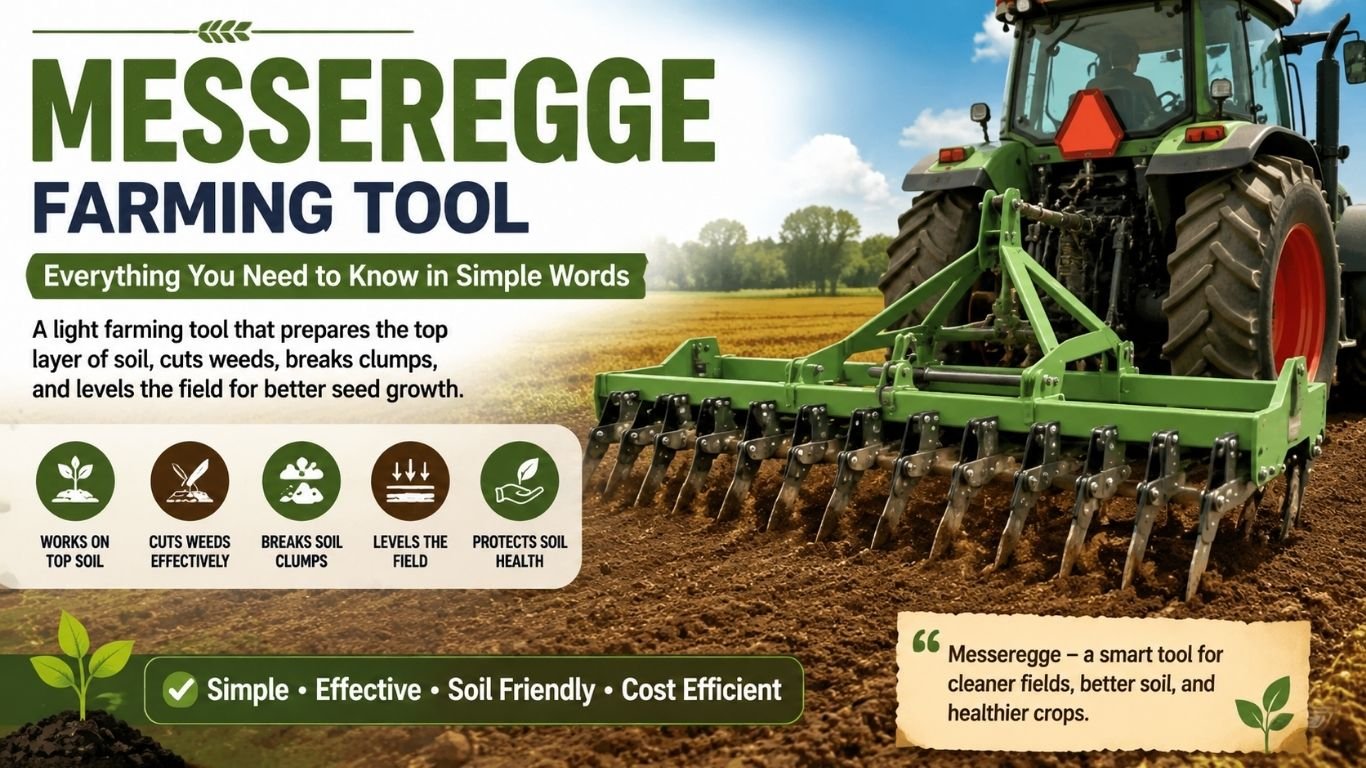
The Messeregge is a simple yet highly effective farming tool used to prepare the upper layer of soil before planting crops. Unlike heavy agricultural machines that dig deep and completely turn the soil, the Messeregge works gently on the surface. It cleans, levels, and improves the soil without disturbing its deeper structure.
In modern agriculture, where soil health is becoming increasingly important, tools like the Messeregge play a key role. Farmers use it to break small weeds, soften compact soil, and create a smooth surface that supports better seed growth. Although the tool is not very complex, its impact on farming efficiency is significant.
In this article, you will learn everything about the Messeregge, including its meaning, origin, working method, uses, and benefits—all explained in simple and easy language.
What is Messeregge?
The Messeregge is a light agricultural implement designed to work on the top layer of soil. It does not dig deeply into the ground like plows or disc harrows. Instead, it focuses on surface-level preparation, which is essential for seedbed readiness.
The word “Messeregge” comes from German language roots:
- “Messer” means knife
- “Egge” means harrow
So, the meaning of Messeregge is literally “knife harrow.” This name perfectly describes its structure and function because it uses sharp blade-like parts to cut and manage the soil surface.
How Does Messeregge Work?
The working method of the Messeregge is simple but effective. It is attached to a tractor or sometimes used as a manual tool in small farming setups. When moved across a field, its sharp blades or tines gently cut through the upper soil layer.
Instead of flipping the soil, the Messeregge performs these actions:
- Cuts small weeds and unwanted plants
- Breaks light soil clumps
- Levels uneven ground
- Loosens compact surface soil
This surface-level action helps prepare a smooth seedbed without disturbing deeper soil layers that contain essential nutrients and microorganisms.
Key Features of Messeregge
The Messeregge is popular among farmers due to its unique and practical features. Some of its main characteristics include:
1. Light Soil Working Tool
It is designed for surface work only, making it gentle on soil structure.
2. Knife-Like Blades
The tool uses sharp blades that slice through weeds and soil easily.
3. No Deep Soil Disturbance
Unlike heavy machines, it does not overturn soil layers.
4. Easy to Operate
It can be attached to tractors or used in simple farming systems.
5. Efficient Field Preparation
It quickly prepares land for sowing seeds.
Uses of Messeregge in Agriculture
The Messeregge has several important applications in farming. Farmers use it in different stages of crop preparation and field maintenance.
1. Seedbed Preparation
One of the main uses of Messeregge is preparing a smooth and clean seedbed. It removes surface weeds and levels the soil, making it ready for planting.
2. Weed Control
It helps cut and destroy small weeds before they grow deeper roots. This reduces competition for nutrients between crops and weeds.
3. Soil Surface Leveling
Uneven land can affect water distribution and seed germination. Messeregge helps create an even surface.
4. Breaking Soil Crust
After rainfall or irrigation, a hard crust forms on the soil. Messeregge breaks this crust to improve air and water movement.
5. Crop Maintenance
In some cases, it is also used during early crop growth to maintain soil conditions.
Advantages of Using Messeregge
The Messeregge offers many benefits to farmers, especially in sustainable and efficient farming practices.
1. Protects Soil Health
Since it does not disturb deep soil layers, it preserves natural nutrients and microorganisms.
2. Saves Time and Effort
It quickly prepares large fields with less labor and time compared to manual methods.
3. Improves Seed Germination
A smooth and clean soil surface helps seeds grow evenly.
4. Reduces Weed Growth
By cutting weeds at an early stage, it reduces their spread.
5. Cost-Effective Tool
It is cheaper to operate and maintain compared to heavy machinery.
Difference Between Messeregge and Other Farming Tools
Many people confuse the Messeregge with other soil preparation tools like plows or disc harrows. However, there are clear differences:
- Plow: Digs deep and turns the soil completely
- Disc Harrow: Breaks and mixes soil more aggressively
- Messeregge: Works only on the surface layer gently
This makes Messeregge ideal for farmers who want minimal soil disturbance and better soil preservation.
Importance of Messeregge in Modern Farming
In today’s agriculture, sustainability is very important. Farmers are encouraged to use methods that protect soil structure and natural fertility. The Messeregge fits perfectly into this approach.
By reducing deep soil disturbance, it helps maintain:
- Soil microorganisms
- Natural moisture balance
- Organic matter in the soil
This leads to healthier crops and long-term soil productivity.
Why Farmers Prefer Messeregge
Farmers choose Messeregge because it offers a balance between efficiency and soil care. It is especially useful in areas where:
- Soil erosion is a concern
- Water retention needs improvement
- Farmers want low-cost farming solutions
- Quick field preparation is required
Its simple design and effective results make it a reliable tool in many agricultural systems.
Conclusion
The Messeregge is a simple but powerful farming tool that plays an important role in modern agriculture. It works on the surface of the soil, cutting weeds, leveling the land, and preparing a smooth seedbed without disturbing deeper soil layers.
Its gentle approach makes it different from heavy farming machines, and its benefits make it valuable for farmers who care about soil health and efficient crop production.
In simple words, the Messeregge is not just a tool—it is a smart farming solution that helps improve productivity while protecting the natural structure of the soil.